What’s the Best Room Temperature for Infants?
As a parent, one of the biggest worries is making sure your little one is comfortable and safe, especially when they're sleeping or playing in their room. I've been there myself—those late-night checks, adjusting blankets, wondering if the air feels just right. But let's cut to the chase: what's the ideal room temperature for infants? Based on years of chatting with pediatricians, reading up on guidelines from places like the American Academy of Pediatrics (AAP), and my own hands-on experience raising kids, I'll break it down for you. We'll also touch on humidity because, trust me, it's just as crucial. And hey, if you're in the market for reliable tools to monitor this stuff, our precision thermometers and hygrometers can make life a whole lot easier.
For this reason, it is vital to know the best temperature for newborn room and how to maintain it consistently. A comfortable room temperature helps your baby sleep better, and sleep is key to healthy development.
Why Room Temperature Matters for Babies
Infants aren't great at regulating their body temperature yet. Their tiny systems are still developing, so they're more sensitive to heat and cold than adults. Overheating can lead to discomfort, poor sleep, or even increase the risk of Sudden Infant Death Syndrome (SIDS), while a room that's too chilly might make them fussy or prone to colds. The goal? Create a cozy environment that mimics the womb—warm, stable, and not extreme.
From what experts recommend, the sweet spot for a baby's room temperature is between 68°F and 72°F (that's about 20°C to 22°C for those using Celsius). This range keeps them snug without sweating or shivering. I remember with my first kid, we kept the thermostat at 70°F year-round, and it worked wonders for consistent naps.
- Too Hot: Babies are unable to regulate their body temperature effectively. If the room is too hot, babies may sweat or become overheated, which can cause discomfort and increase the risk of SIDS.
- Too Cold: If the temperature is too low, babies may feel chilly, which can lead to irritability and possibly respiratory issues. Cold temperatures also make it harder for babies to stay warm and comfortable during sleep.
Practical Tips for Managing Your Baby’s Room Temperature
Monitor and Adjust Regularly
As a parent, you want to make sure your baby’s environment stays consistent. Sometimes, room temperature can fluctuate, especially if you're using heating or cooling systems. Here are some ways to ensure your baby is always in the ideal temperature range:
- Use a indoor thermometer: An indoor thermometer is a simple and effective way to keep track of your baby’s room temperature. It’s helpful to monitor this regularly, especially as the seasons change.
- Dress your baby appropriately: Layer your baby’s clothing based on the room temperature. A good rule of thumb is to dress your baby in one more layer than you would wear yourself in the same room.
- Control room temperature with the help of fans or heaters: If the room temperature falls outside the ideal range, you can use a fan or space heater to bring it back within the comfortable range. Just be sure that the fan or heater is positioned safely and doesn't blow directly on your baby.
- Check for signs of discomfort: If your baby seems restless or fussy, it could be due to temperature. Check if your baby feels too hot or too cold by touching their back, chest, or neck.
- Be aware of the season: In winter, rooms tend to get too dry; in summer, they may become sticky and warm. Adjust air conditioners or humidifiers accordingly.
How to Monitor Room Temperature for Your Infants
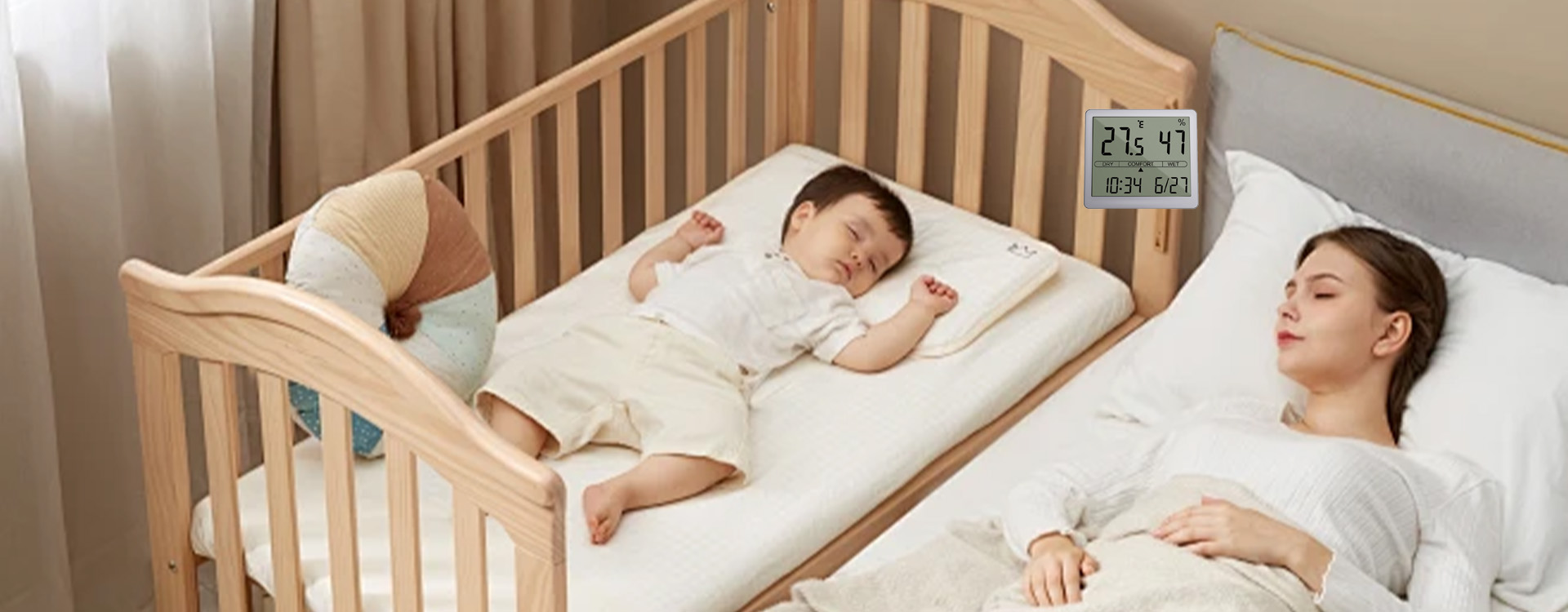
To help you monitor your baby's room temperature and humidity, the Lonnmeter LDTH-100 Digital Hygrometer Thermometer is an excellent choice. Here’s why this product is perfect for parents:
Features of the LDTH-100 Indoor Hygrometer Thermometer
- 【Fast Refresh & High Accuracy】Wide measuring range that measures temp from -9.9˚C-60˚C and relative humidity from 10%-95%, temperature accuracy: +-2˚F(1˚C); relative humidity accuracy: +-3%RH.Data measurements are updated every 10 seconds to give you the latest updates on your home.
- 【Clear Large LCD Display】Small humidity temperature monitor with clear bold numbers features neat and slim border, easier to read from any angle and distance. Also displays the time, month and date.
- 【Multiple placement options】The inside humidity gauge thermometer can be mounted in a variety of ways: desktop stand, magnet attaching, stick on the wall via the metal adhesive pad. You can stick or place it anywhere you like, While it's portable and lightweight to carry around easily.
- 【Energy-efficient design】The indoor hygrometer is equipped with 2 CR2032 button batteries to ensure long-term use, no need to frequently replace batteries, which is convenient and cost-saving.
- 【Healthier Home & Environment】This thermometer hygrometer with temperature and humidity sensor ensures proper indoor humidity that achieves important health benefits for skin and allergen; Can also serve as a refrigerator thermometer, freezer thermometer, reptile thermometer, soil thermometer, humidor hygrometer, cigar hygrometer, and more.
Why Is It Perfect for Your Baby’s Nursery
- Prevents Overheating and Overcooling: With precise temperature monitoring, you can avoid the risk of your baby getting too hot or too cold during sleep.
- Supports Healthy Breathing: Monitoring the humidity level in the room is equally important. Babies are more vulnerable to respiratory discomfort, and the right humidity can make a big difference in their overall well-being.
- Peace of Mind: By using the Lonnmeter LDTH-100, you gain peace of mind knowing that you are consistently creating the ideal environment for your baby to grow and thrive.
Common Questions about Room Temperature for Infants
As new parents, many questions arise when it comes to creating the best environment for your baby, especially regarding room temperature. Here, we’ve gathered some of the most common questions parents often ask about room temperature for infants, and provided expert answers to help you ensure your baby’s comfort and safety.
Q1: What is the ideal room temperature for a newborn or young infant? A: The recommended room temperature for a sleeping or resting infant is 68–72°F (20–22°C). This range helps prevent overheating while keeping them comfortably warm. Most major pediatric organizations (AAP, NHS, WHO) agree on this guideline.
Q2: Is it better to keep the room warmer or cooler? A: Slightly cooler (closer to 68–70°F / 20–21°C) is generally safer than too warm. Overheating is a known risk factor for Sudden Infant Death Syndrome (SIDS), while being a little too cool is less dangerous for healthy infants who are appropriately dressed.
Q3: How should I dress my baby for sleep in this temperature range? A:
- At 68–72°F (20–22°C): Usually a long-sleeve cotton onesie + light sleeper/sack + thin cotton hat (optional for newborns, remove once asleep).
- Avoid heavy blankets, comforters, or loose bedding. Use a swaddle or wearable blanket/sleep sack instead.
Q4: What if my house is colder than 68°F (20°C)? A: Dress the baby in an extra layer (e.g., fleece sleep sack or additional bodysuit). Check the baby’s neck, chest, or back (not hands/feet) to see if they feel warm. If the baby is cool to the touch, add one light layer.
Q5: What if the room is hotter than 72°F (22°C)? A: Use lighter clothing (e.g., short-sleeve onesie + thin sleep sack). Keep the baby in a single layer if it’s very warm. Never cover the head with a hat if the room is warm — it can cause overheating.
Q6: How can I tell if my baby is too hot or too cold? A:
- Too hot: Sweaty neck/back, flushed cheeks, rapid breathing, fussiness, warm chest.
- Too cold: Cool hands/feet (normal in infants), cold chest or back, pale skin, shivering. Best check: Feel the back of the neck or upper chest — it should feel comfortably warm (not hot or clammy).
Q7: Should I use a heater or air conditioner? A:
- Heater: Safe if used safely (far from crib, no cords near baby). Keep it on low to maintain steady temperature.
- Air conditioner: Fine — just ensure the room doesn’t get too cold. Avoid direct cold air blowing on the baby.
Q8: Does the temperature matter during the day when the baby is awake? A: Daytime can be slightly warmer (up to 74–76°F / 23–24°C) if the baby is active and dressed lightly. The 68–72°F range is most important for sleep, when overheating risk is higher.
Q9: Is it okay to use a fan in the room? A: Yes, a fan is safe and may even reduce SIDS risk slightly (by improving air circulation). Aim it away from the baby and don’t let it blow directly on them.
Q10: What about humidity? A: Ideal humidity is 40–60%. Too dry can irritate the baby’s skin and airways; too humid can promote mold and bacteria. Use a humidifier if your home is very dry (common in winter).
Quick Summary Table
| Temperature | Clothing Recommendation | Notes |
|---|---|---|
| 68–70°F (20–21°C) | Long-sleeve onesie + light sleep sack | Ideal for most sleeping infants |
| 70–72°F (21–22°C) | Long-sleeve onesie + thin sleep sack | Still safe |
| >74°F (23°C+) | Short-sleeve onesie + very light sack | Avoid heavy layers or hats |
| <68°F (20°C) | Extra layer (fleece sack, bodysuit) | Check baby’s core (neck/chest) |
Always trust your instincts — if the baby seems uncomfortable, adjust layers or temperature slightly and check again.
Final Thoughts: Comfort Is About Control, Not Guessing
Keeping your infant's room between 68°F and 72°F with 30-50% humidity isn't rocket science, but it does require attention. It's all about creating that safe, soothing space where your baby can thrive. If you're unsure about your setup, start with a quality Lonnmeter LDTH-100 Indoor Hygrometer Thermometer to get accurate insights.
Ready to make monitoring effortless? Check out our selection of warm humidity meters on the site—they're built to last and backed by our satisfaction guarantee. Your little one's sweet dreams (and yours) are worth it!
What are your go-to tips for nursery temps? Drop a comment below—I'd love to hear!