When most homeowners think about damage to their property, they picture obvious culprits: leaks, pests, or storm-related issues. But some of the biggest threats are invisible, temperature swings and unchecked humidity in your garage, basement, or attic. Take temperature and humidity monitoring—it's not glamorous, but if you've ever dealt with a musty basement, a sweltering attic, or a garage that freezes your tools solid, you get it. These overlooked spaces in your home can turn into problem zones without warning, leading to mold, warped wood, or spoiled storage items. therefore If you’ve ever noticed musty smells in your basement, extreme heat in your garage, or condensation in your attic, temperature and humidity are likely part of the problem.
Unlike living spaces, garages, basements, and attics are often “out of sight, out of mind.” But these areas play a huge role in your home’s overall comfort, energy efficiency, and long-term structural health. Tracking temperature and humidity in these spaces is one of the simplest ways to prevent expensive issues before they start.
The good news? You don't need a complicated HVAC system or pricey monitoring service to stay ahead of these risks. A compact, accurate device like a digital indoor hygrometer thermometer lets you keep tabs on these spaces before small fluctuations become costly problems.
Why Bother Tracking Temps in These Forgotten Spaces?
Picture this: It's mid-summer, and your attic hits 120°F. That heat seeps into the rest of your house, cranking up your AC costs. Or worse, in winter, your basement dips below freezing, and pipes burst—hello, expensive repairs. Garages? They're like the wild west of home climates, swinging from hot to cold based on the weather outside.
From my years running high-volume e-commerce ops, I've seen how small environmental tweaks can save big. Monitoring temperature and humidity helps you:
Prevent Mold and Mildew: Basements are notorious for high humidity. Anything over 60% invites mold, which can ruin stored clothes, books, or even affect your health.
Protect Valuables: Attics often house holiday decorations, old furniture, or family heirlooms. Extreme temps can crack wood or fade fabrics.
Optimize Energy Use: Spotting hot spots in the garage means better insulation decisions, potentially slashing your utility bills.
Safeguard Tools and Gear: If you're like me and use the garage as a workshop, fluctuating temps can rust metal tools or degrade paints and adhesives.
Real talk—Don't wait for a problem to show up; track it before it bites.
Step-by-Step Guide to Monitoring Your Garage, Basement, and Attic
The Lonnmeter LDTH-100 Digital Indoor Hygrometer Thermometer is designed for exactly this kind of everyday protection. Don't let its compact size fool you. It's packed with features that make it an essential safeguard for your home.
Key Benefits:
【Fast Refresh & High Accuracy】Wide measuring range that measures temp from -9.9˚C-60˚C and relative humidity from 10%-95%, temperature accuracy: +-2˚F(1˚C); relative humidity accuracy: +-3%RH.Data measurements are updated every 10 seconds to give you the latest updates on your home.
【Clear Large LCD Display】Small humidity temperature monitor with clear bold numbers features neat and slim border, easier to read from any angle and distance. Also displays the time, month and date.
【Multiple placement options】The inside humidity gauge thermometer can be mounted in a variety of ways: desktop stand, magnet attaching, stick on the wall via the metal adhesive pad. You can stick or place it anywhere you like, While it's portable and lightweight to carry around easily.
【Energy-efficient design】The indoor hygrometer is equipped with 2 CR2032 button batteries to ensure long-term use, no need to frequently replace batteries, which is convenient and cost-saving.
【Healthier Home & Environment】This thermometer hygrometer with temperature and humidity sensor ensures proper indoor humidity that achieves important health benefits for skin and allergen; Can also serve as a refrigerator thermometer, freezer thermometer, reptile thermometer, soil thermometer, humidor hygrometer, cigar hygrometer, and more.
-2.jpg?w=1280&h=676)
Why Is ThermoPro LDTH-100 Good for Monitor indoor Humidity & Temperature?
The Face Icon Advantage: Simple at a Glance
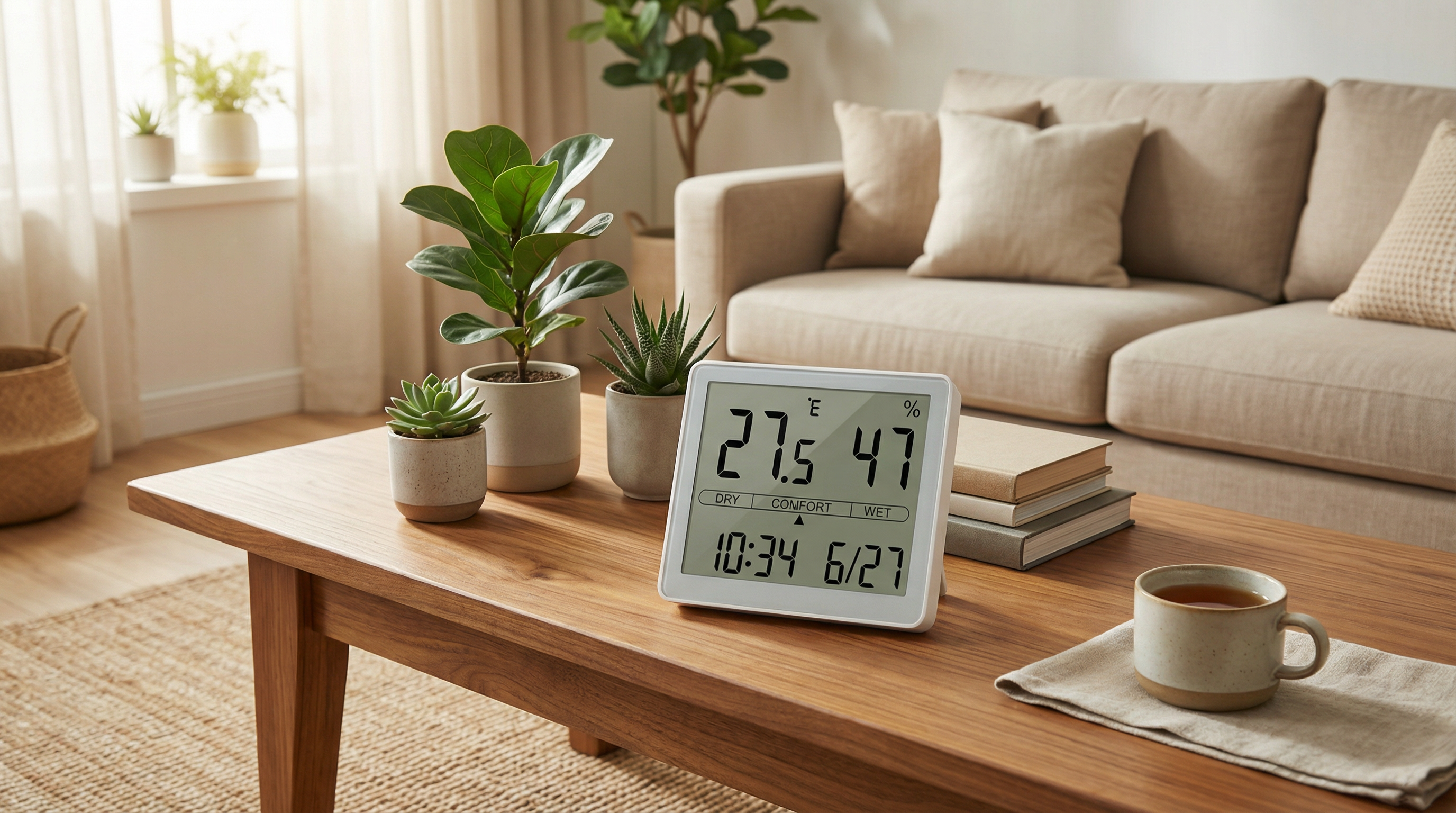
One of the best features of the Lonnmeter LDTH-100 is its face icon comfort indicator. You don't have to interpret numbers or wonder if 65% humidity is "too much." A smiley face means the environment is safe. A frown means conditions are trending toward dry or damp and action may be required.
For busy homeowners, this quick visual check saves time. Instead of scrolling through apps or charts, you know instantly whether your garage, basement, or attic is in a safe zone.
Everyday Use Beyond Damage Prevention
While the ThermoPro LDTH-100 is ideal for preventing costly damage in hidden spaces, it's just as useful in everyday rooms:
- Baby rooms: ensure air is comfortable and safe.
- Home offices: prevent overly dry air that causes discomfort.
- Greenhouses: track humidity for plant health.
- Wine cellars: maintain stability for long-term storage.
- Guitar or instrument rooms: protect wood from warping.
Its compact design and versatile mounting options make it easy to move from one space to another as needed.
Scenario: The Homeowner Who Caught a Problem Early
Picture this: A homeowner places a LDTH-100 in their basement and notices the humidity creeping up to 68% during spring rains. The face icon turns from "comfort" to "wet." Acting fast, they run a dehumidifier for a week, bringing humidity back to safe levels.
The result? No mold, no damage, no musty smell spreading through the house. For less than the cost of dinner out, the LDTH-100 provided an early warning that prevented hundreds if not thousands in repair bills.
Building a Habit of Prevention
Home maintenance doesn't always mean climbing ladders or calling in contractors. Sometimes it's about information, knowing what's happening before damage occurs. The LDTH-100 builds that habit effortlessly. Place one in each key zone (garage, basement, attic), and you've got a monitoring system that refreshes every 10 seconds, giving you constant peace of mind.
By making temperature and humidity checks part of your seasonal routine, you shift from reactive homeowner to proactive protector.
Two More Reasons to Rely on the LDTH-100
First, it's highly accurate. In spaces like attics or basements, a few degrees or percentage points make a difference. Knowing your readings are within ±1°F and ±2-3% RH lets you act with confidence.
Second, it's simple to use. There's no Wi-Fi, no complicated setup, no subscriptions. Just place it where you need it, and it does its job. For homeowners who value reliability without tech clutter, that simplicity is a major advantage.
Common Pitfalls to Avoid
I've seen plenty of mistakes in my career. Don't place meters near heat sources like furnaces—that skews readings. Ignore battery checks at your peril; dead batteries mean missed data. And if you're in a humid climate, calibrate annually for spot-on accuracy.
Also, think seasonally: Ramp up checks in summer for attics and winter for basements. It's like inventory management in e-commerce—stay ahead, and you win.
Wrapping It Up: Take Control Today
Tracking the temperature and humidity in your garage, basement, and attic isn’t just for perfectionists—it’s smart home ownership.
With the Lonnmeter LDTH-100 Digital Indoor Hygrometer Thermometer, you gain a powerful layer of protection. Its accurate sensors, fast refresh rate, comfort icons, and versatile placement options make it the simplest, most affordable way to monitor conditions before problems escalate.
Protect your investment, your belongings, and your peace of mind with one small device. Because when it comes to home maintenance, prevention is always the smartest play.
Got questions or your own temp-tracking hacks? Drop a comment below—I'd love to hear how you're handling these spaces.